


Project reports
The Cap Anamur project reports describe the work of our teams on site, provide insights and depict current developments in the aid project.
It is with a heavy heart that we must report on the current situation regarding our project in the Nuba Mountains in Sudan.
For almost 30 years, we have worked alongside the local community to build, expand and run the hospital in Lwere. Throughout all those years, the hospital has been far more than just a place providing medical care. It has been a safe haven for hundreds of thousands of people and a symbol of hope in a region that has been marked by conflict for decades. Millions of internally displaced people found refuge from violence and persecution in the Nuba Mountains. For many, our hospital was the only place where they could receive medical care.
The violence has reached Lwere
Since the start of this year, the political and military situation in Sudan has become increasingly tense. What had long seemed unimaginable has now become a reality: the conflict has reached the Nuba Mountains.
Over the past few weeks, the security situation around our hospital has deteriorated dramatically. Fighting has taken place in and around Lwere, and a rebel group has taken control of the town.
Following intensive discussions and numerous appeals for a humanitarian corridor, no one was able to guarantee the safety of our entire team. We therefore had to reorganise our work on the ground.
Some members of our team have remained at the hospital in Lwere. These staff members are not directly affected by the current ethnic conflict and are currently safe. They are maintaining hospital operations at a greatly reduced level under difficult conditions to ensure that medical care does not come to a complete standstill.
As a precautionary measure, another group of our team has been moved to a safe location. These staff members are now providing medical support at a health centre in a different location, where they can continue to care for patients.
This arrangement is, for the time being, a temporary solution. We are continuously monitoring and reassessing the security situation. Should the threat level continue to escalate, we will need to adjust our approach and the deployment of our staff once again.
A painful loss
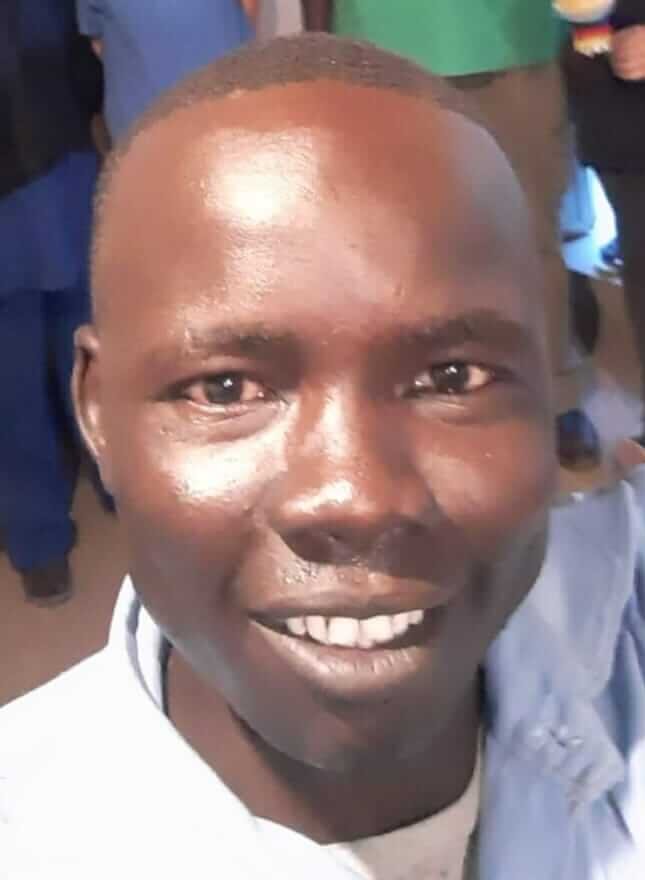
The fighting has claimed numerous civilian lives. We are particularly devastated by the loss of our long-standing colleague Abdulkarim, who worked for many years as an emergency aid worker for Cap Anamur. With great dedication and tireless commitment, he stood by the people of the Nuba Mountains.
Our thoughts are with his family, his friends, and all the loved ones of the victims of this conflict. We mourn with them.
Medical care under the most challenging conditions
The consequences of the violence are devastating for the local population. Medical care in the region is severely restricted. People with injuries, pregnant women, children and those with chronic illnesses currently have virtually no access to life-saving treatment. Our health centre in Debbi has also been affected by the fighting. We hope to be able to resume our work there as soon as the security situation allows.
It is currently impossible to predict what the future holds for Lwere. There is simply too much uncertainty about what will happen to the hospital and whether what we have built up together with the local community over almost three decades will be preserved.
We won’t give up on the people
At the moment, the safety of our staff is our top priority. At the same time, we are doing everything we can to maintain medical care as far as possible. One thing is certain, however: we want to continue providing medical support to the people in the Nuba Mountains, even under these difficult conditions. As soon as the security situation allows, we intend to expand our work again. The fighting has claimed numerous civilian lives. We are particularly devastated by the loss of our long-standing colleague Abdulkarim, who worked for many years as an emergency aid worker for Cap Anamur. With great dedication and tireless commitment, he stood by the people of the Nuba Mountains.