


Typhoid fever in one of the world’s poorest countries – an insight into treatment
How medical aid saves lives in the Central African Republic.
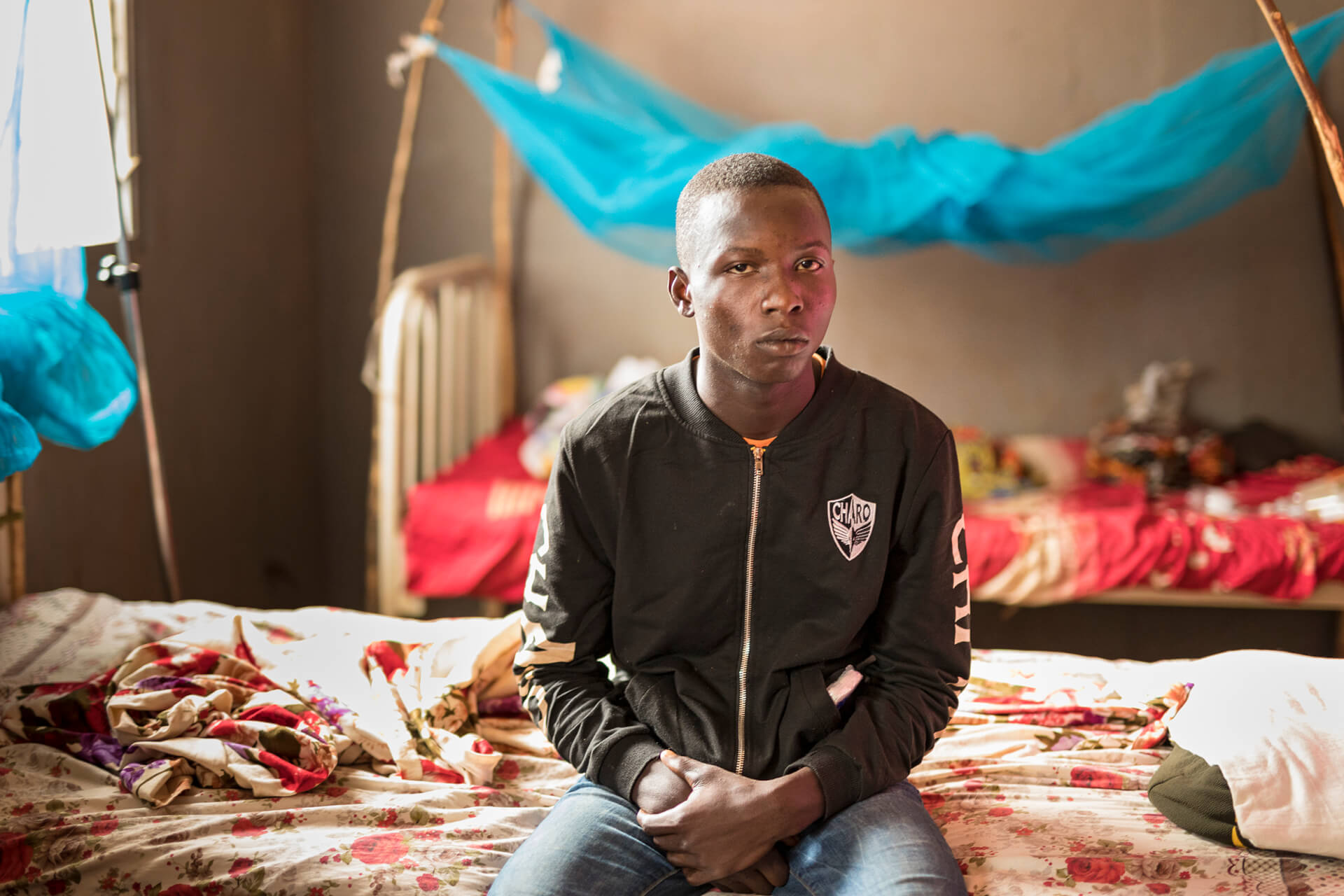
A young patient in acute distress
When 19-year-old Bertin arrived at the emergency room of our project in the Central African Republic, it was immediately clear how serious his condition was. He lay curled up on the bed, his legs drawn up, writhing in severe abdominal pain. He had been suffering from diarrhoea, sometimes bloody, and high fever for several days. He was barely able to eat or drink. Despite everything, he was conscious and able to talk to us. But overall, he was in very poor condition.
What typhoid fever is – and why it is still so widespread here
Suspicions of typhoid fever quickly grew stronger. Typhoid fever is a bacterial infectious disease that is transmitted through contaminated drinking water or food. The bacteria enter the intestines, multiply there and can cause a serious infection. Typical symptoms include persistent fever, severe abdominal pain, diarrhoea and increasing weakness. In regions such as the Central African Republic, typhoid fever is unfortunately widespread because many people do not have safe access to drinking water or functioning sanitation facilities. In addition, there is poverty and limited access to medical care. Patients often arrive at a clinic very late, when the disease has already caused serious damage.
A ray of hope – and the dramatic twist
After admission, Bertin was immediately treated with antibiotics. Initially, the treatment seemed to be working: his fever dropped, the diarrhoea decreased and his condition improved slightly. But just two days later, his condition deteriorated dramatically. The abdominal pain increased significantly, and his abdomen was hard and sensitive to touch. An ultrasound revealed that fluid and air had accumulated outside the intestine. This was a sign that the intestine had ruptured in one place.
Life-saving decision under difficult conditions
The diagnosis was acute perforation with resulting inflammation in the abdominal cavity, a life-threatening complication. Together with the surgical team and Bertin’s relatives, it was decided to operate immediately despite his weakened condition. During the procedure, the diagnosis was confirmed: the last section of his small intestine had ruptured, and intestinal contents had spread into the abdominal cavity, causing inflammation.
Close monitoring after surgery
The operation was successful. The intestinal perforation was closed, the abdominal cavity thoroughly rinsed and a drain inserted. Then the most critical phase began. Bertin had to be closely monitored. He was given several antibiotics at the same time and was not allowed to eat anything for several days in order to protect the newly treated area of his intestine. Under the conditions of one of the poorest countries in the world, this treatment is particularly challenging. Medications must be reliably available, the therapy must be implemented exactly according to plan, and relatives must understand why patience is now vital.
Step by step back to life
In numerous conversations, the family was explained why even seemingly simple rules, such as not eating for several days, are crucial for survival. This trust and cooperation between the medical team, nursing staff and relatives contributed significantly to Bertin’s condition remaining stable. After a few days, he was able to be transferred from the monitoring ward to the normal ward. The drain was removed and he began to eat again cautiously. Seven days after the operation, Bertin was discharged home in good condition.
Why your support matters
Bertin’s story shows that typhoid fever is treatable with the right medical care. But it also shows how quickly a potentially curable disease can become life-threatening when clean water, early diagnosis and medical care are lacking. Bertin’s survival is the result of dedicated medical work on the ground and the support of people who make this help possible.