When oxygen is scarce, every minute counts
For seriously ill children, oxygen can mean the difference between life and death. At the Ola During Children’s Hospital in Sierra Leone, however, there is a recurring shortage of oxygen and the necessary equipment. The medical team has to improvise, while for children like Adama, every minute counts.
For seriously ill children, oxygen can mean the difference between life and death. In cases of severe respiratory diseases, infections, or other life-threatening complications, a child’s own breathing is often insufficient to supply the body with enough oxygen. In such cases, a continuous supply of oxygen is essential. If the oxygen level in the blood drops too low, a child’s condition can deteriorate to a life-threatening level in a very short time.
At the Ola During Children’s Hospital in Sierra Leone, however, this care is repeatedly at risk. There is a lack of sufficient oxygen, as well as the necessary supplies and procedures to ensure reliable, round-the-clock care. For the medical staff, this means having to improvise time and again, even though any interruption can be dangerous, especially for seriously ill children.
Adama: When Every Breath Becomes a Struggle
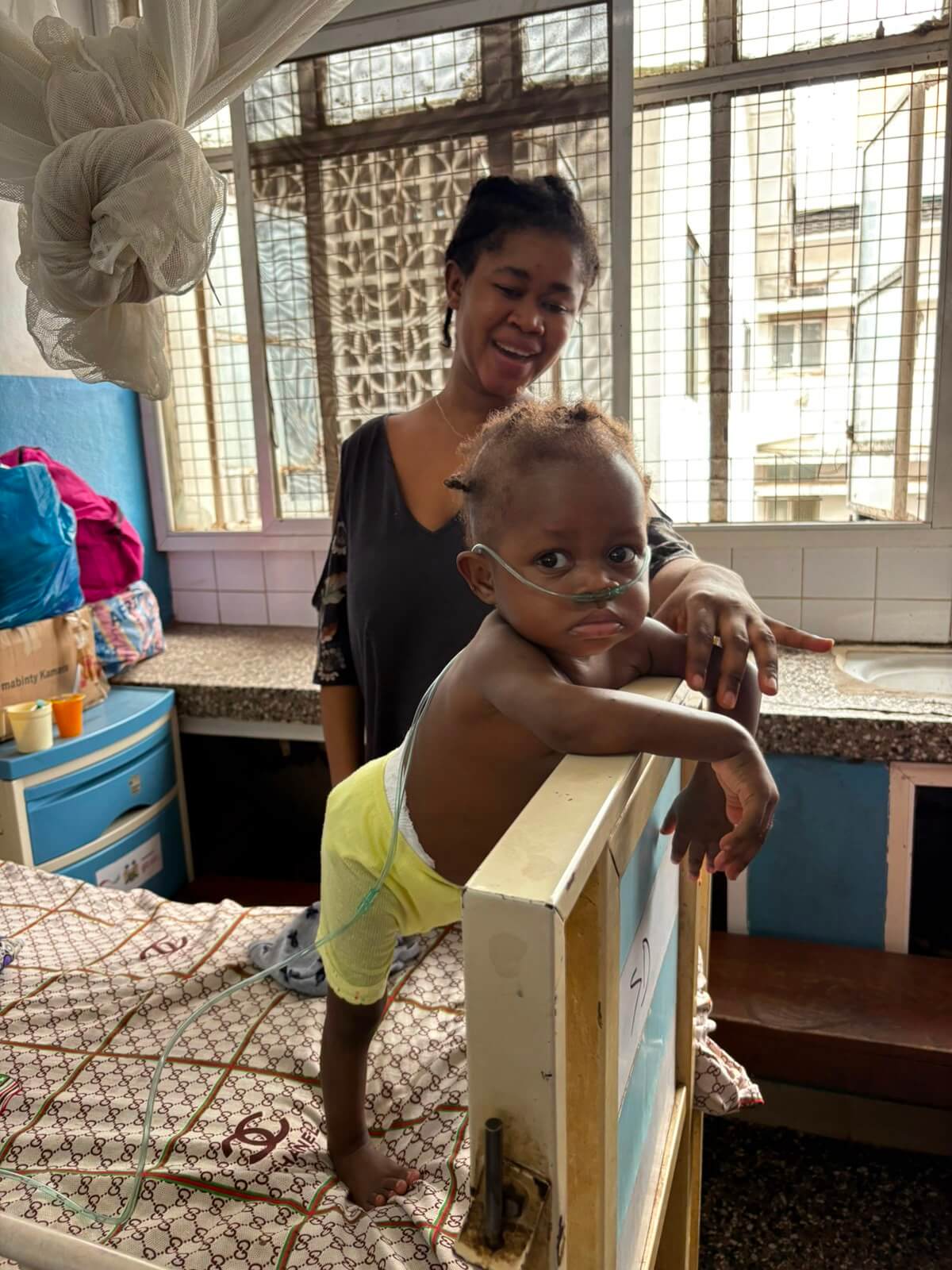
Adama lives in an apartment with her mother and her great-grandmother. Her mother has no contact with the girl’s father. When Adama is admitted to Ola During Children’s Hospital, she is suffering from a cough, fever, and severe shortness of breath. She is initially treated with antibiotics, but her condition does not improve. Her breathing continues to deteriorate, so she is eventually transferred to another ward. There, too, she is in urgent need of supplemental oxygen.
During a ward transfer, Adama finds himself in a life-threatening situation. The available oxygen tanks and connections are not sufficient to reliably supply all the children. The team must therefore improvise and distribute oxygen to several children using connections they have built themselves. During this time, Adama’s condition deteriorates dramatically: her oxygen saturation drops to about 40 percent. The medical team fears she might die.
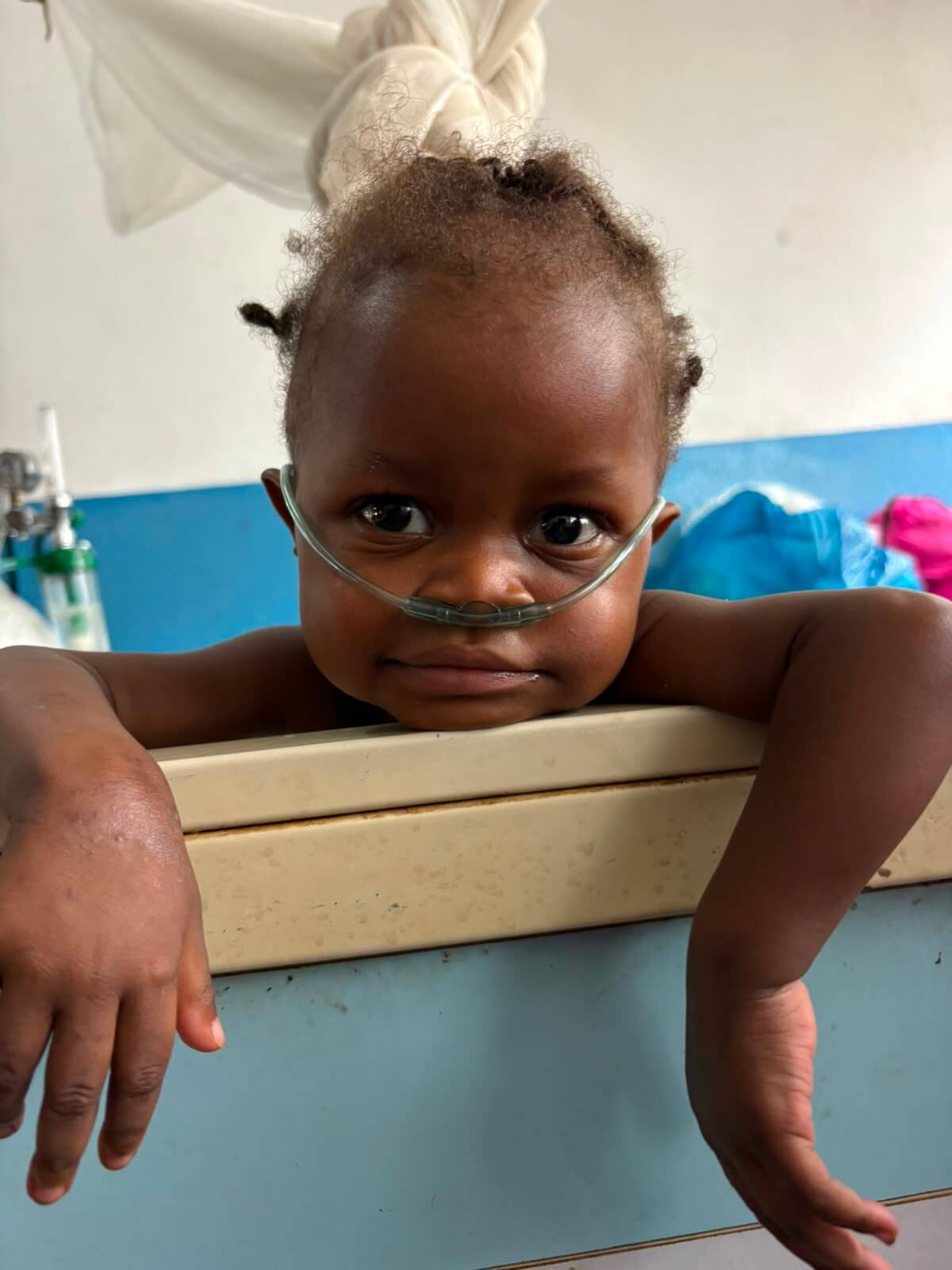
It wasn’t until the staff were able to secure a separate oxygen cylinder and a special breathing aid for Adama that his condition stabilized. They built the so-called “bubble CPAP” themselves on site using simple materials. To do this, they used an empty, cleaned plastic bottle, which they filled with water and pierced with holes. Adama received oxygen through a nasal tube.
This setup is a makeshift solution for a situation in which the necessary medical equipment is not sufficiently available. Valuable time is lost before Adama can be supplied with oxygen on his own and the respiratory support system is functioning properly.
However, the cause of her symptoms remains unclear. Despite being treated with various antibiotics, she remains seriously ill. After weeks in the hospital, the suspicion of tuberculosis is finally confirmed. The medical team begins the appropriate treatment.
After a few weeks, the first signs of improvement become apparent. Adama becomes more active, starts playing again, and is able to eat and drink better. However, her lungs remain severely compromised. Without supplemental oxygen, her oxygen saturation drops once again to dangerously low levels. She therefore remains dependent on a continuous supply of oxygen. Das Behandlungsteam muss besonders darauf achten, dass Adama jederzeit ausreichend Sauerstoff erhält und ihre Versorgung nicht mit der anderer Kinder geteilt werden muss.
Adamas Geschichte zeigt, dass selbst eine wirksame Behandlung an ihre Grenzen stößt, wenn lebenswichtige Ressourcen fehlen. Die richtige Diagnose und geeignete Medikamente sind entscheidend. Doch damit sie wirken können, muss auch die grundlegende Versorgung gesichert sein.
When oxygen tanks become a scarce resource
Adama’s experience is not an isolated case. Dangerous situations arise time and again because oxygen tanks are empty or replacements are not available in time. In some cases, children in the pediatric ward and the intensive care unit have to share oxygen tanks. Medical staff must constantly reassess which child receives oxygen when and where the supply is most urgently needed.
If necessary connections or other supplies are missing, the situation becomes even more difficult. Staff members then, for example, set up connections themselves to provide oxygen to several children from a single source. However, such a solution can compromise the care of each individual child. If a cylinder runs out overnight without being noticed in time, the condition of the affected children can deteriorate significantly by the next morning.
Organizing the oxygen supply thus takes up valuable time that medical staff could otherwise devote to patient care. Instead of being able to focus exclusively on caring for patients, staff members must transport oxygen tanks, procure replacements, and find technical solutions. Added to this are spatial constraints that make it difficult to reliably isolate patients.
What is taken for granted in Germany becomes a daily challenge
In Germany, a reliable oxygen supply is part of everyday medical practice. Hospitals typically have central supply systems or organized cylinder systems. Fill levels are monitored, replacements are scheduled, and the supply is integrated into established procedures. No one should have to decide which seriously ill child receives oxygen and which does not.
In Sierra Leone, this basic requirement cannot always be guaranteed under the current circumstances. The clinic relies on a sufficient supply of filled oxygen tanks, compatible connectors, and well-functioning organizational processes. If even a single component is missing, patient care may be jeopardized despite the medical team’s tremendous efforts.
So That Medical Care Can Be Effective
At the Ola During Children’s Hospital, the staff works every day to provide the best possible care for sick children. But medical knowledge and personal dedication alone are not enough. The necessary resources and reliable systems are also needed to ensure that treatment can be carried out safely.
For children like Adama, a continuous supply of oxygen is essential for recovery. It must not depend on whether a full tank, a compatible connector, or a makeshift solution is available at any given moment. Because when a child is struggling to breathe, every minute counts.